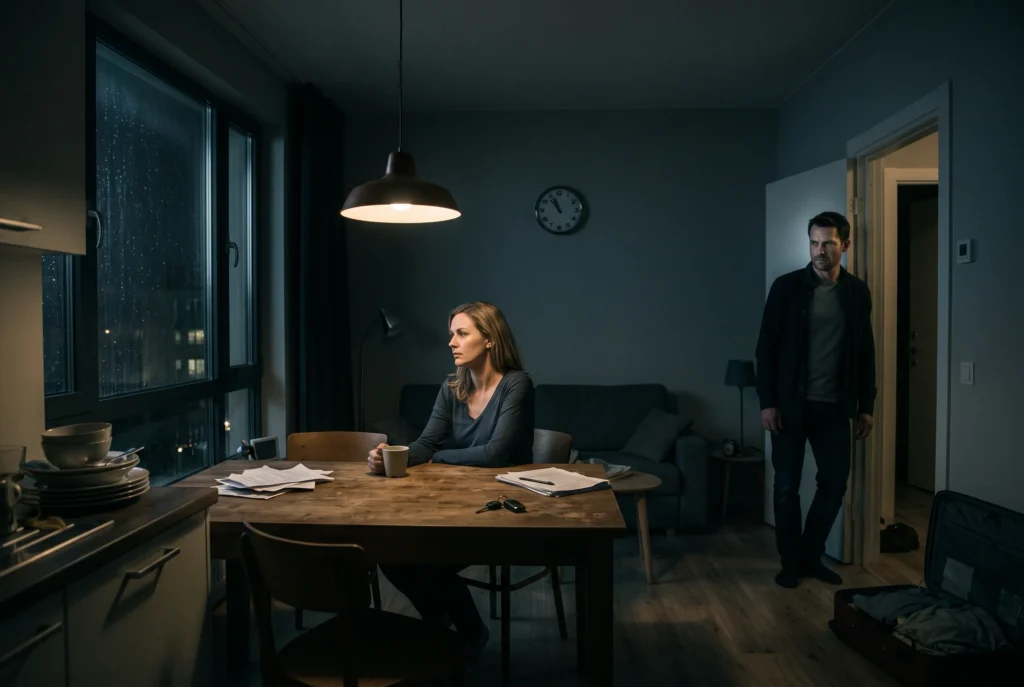

For years, I worked like a dog to save a relationship.
I read the books, worked on myself, and kept searching for something I could heal or explain that would bring us closer. Underneath all that effort was a simple wish: I wanted to feel loved by the person I loved.
Instead, I felt increasingly devalued. The relationship created a kind of emotional vertigo. The goalposts kept moving, and I struggled to find my footing.
The lack of affection made everything hurt more. I tried to work it back, heal it back, even argue it back. Somehow, “fixing the relationship” became a job I was doing mostly alone.
And there was another painful truth: I was growing to dislike the person whose affection I was trying so hard to regain.
The manipulation, the need for control, and the interpersonal messes I kept cleaning up had worn away my warmth toward her. Resentment grew into disgust. That is hard to admit, but it belongs in the story.
Meanwhile, I was living inside a belief that felt like a rule: *I can’t get divorced.*
So I felt I had to find a way to be close, even as I felt less open toward her. I believe she could sense it.
The cycle took on a life of its own. Hurt fed resentment. Resentment made closeness harder. The distance hurt, so I worked even harder to repair it.
I was exhausted, and still convinced I needed to try harder.
What withholding affection looks like
Affection lives in small moments: a kind word, a hug, an interested conversation, a little tenderness that says, “You matter to me.”
When affection becomes a tool of control, those moments start to feel conditional. Warmth may disappear after you disagree or set a boundary. You may feel pressure to apologize, drop a concern, or fall back in line before connection returns.
Using affection to punish a partner is a form of emotional abuse. It can be part of a narcissistic pattern, but a lack of affection alone does not make someone a narcissist.
How it functions
When connection feels scarce, getting it back can take over your attention.
You start asking: What should I change? How should I say it? What am I still doing wrong?
In my relationship, those questions became an endless assignment I kept giving myself. I was so focused on earning connection that I lost touch with my own needs.
The distance around affection, intimacy, and sex wore down my confidence. I felt off balance, farther from my center, and easier to control.
It worked.
How to tell the difference
Someone can love you and still be tired, ill, overwhelmed, hurt, or simply not in the mood. Everyone has the right to decline sex or touch, including within a marriage. Consent must be freely given, without pressure.
Look at the pattern around the distance. Can both people talk about their needs without ridicule or punishment? Are boundaries respected in both directions? Is there a willingness to understand each other and address what is happening?
You can respect someone’s boundaries and still decide that the relationship does not meet your needs.
How to respond
Start by taking your loneliness seriously. It deserves care.
You do not have to prove your partner is a narcissist before acknowledging that the relationship is hurting you.
You might say:
“I respect your boundaries. I miss feeling close to you, and I need a relationship where affection and connection matter to both of us. Are you willing to work on that together?”
Then watch what follows. Is there shared effort and lasting change, or does the responsibility keep returning to you?
Talk with someone you trust. An individual therapist or a grounded friend can help you get your bearings.
For me, healing included questioning the belief that I could not leave. It also meant facing my resentment. I could not argue myself into feeling close to someone I increasingly disliked.
Working on myself helped me understand my choices. It could not supply another person’s willingness to repair the relationship.
Eventually, I healed enough to know I could leave, deserved to leave, and could stop settling for crumbs of affection.
After leaving, I realized how much I had accepted as normal. I had been living on a trickle of water, trying to become better at surviving thirst. There were people who could offer affection warmly and freely—a waterfall compared with what I had come to expect.
By a waterfall, I mean generous, mutual care: freely offered warmth, respect for each other’s boundaries, and a willingness to repair when things go wrong.
If this feels familiar, please be gentle with yourself. Wanting love did not make you weak. All the years you spent trying do not obligate you to keep trying forever.
You are allowed to want a relationship where affection flows both ways.